
Hawthorn
The May Tree

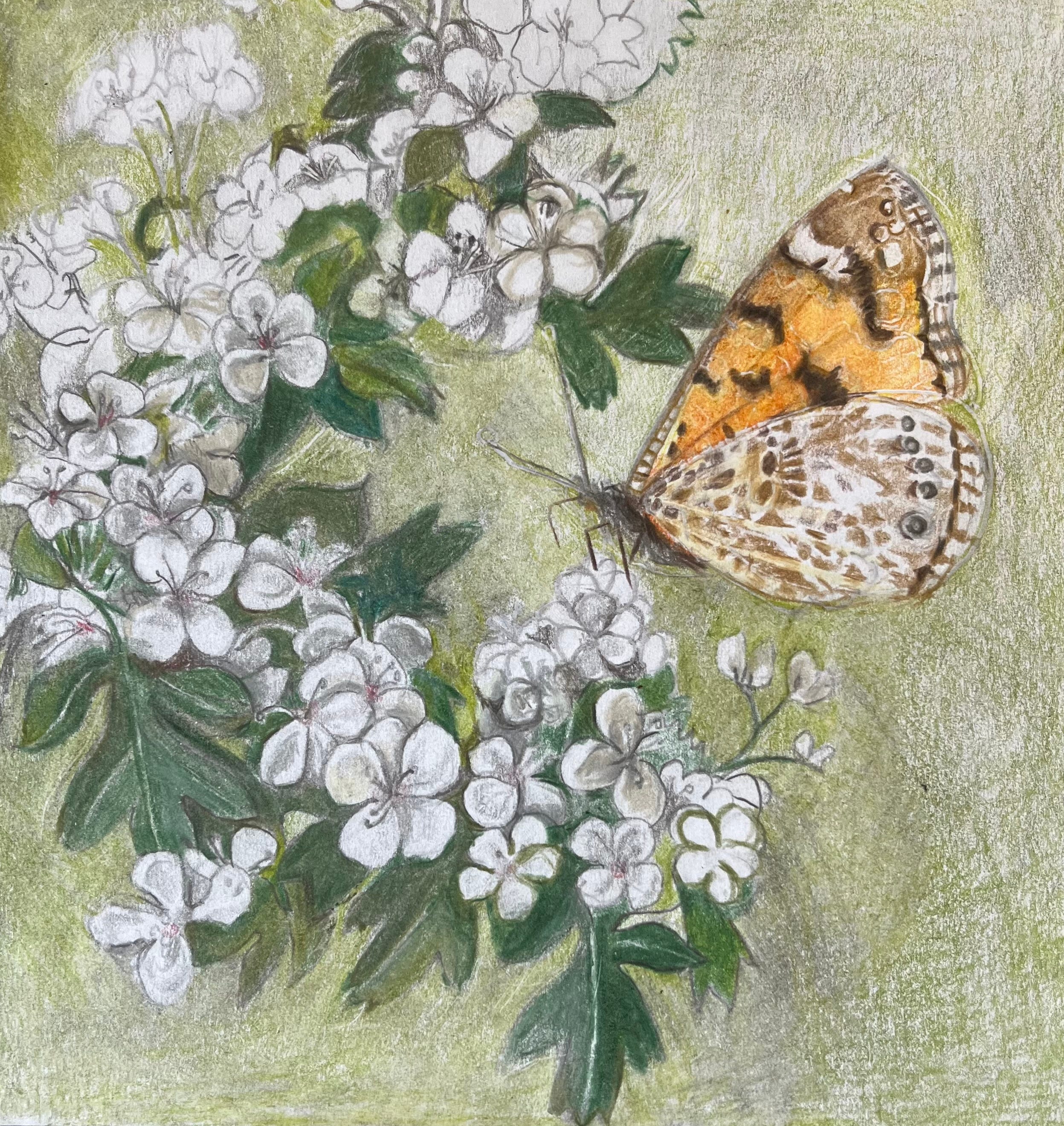
All of a sudden, May is here. The weather is pleasant, so I decide to go out in search of a hawthorn tree. This is also known as the 'May tree', because it blossoms at the start of the month. I walk down to the canal near my home and search along the side of a towpath that is half maintained and half wilderness.
It is a nice walk, not too many cycles or joggers today, as it is still a little overcast. I stop to watch a swan majestically make its way across the water and between the canal boats. When I was younger, I used to dream of owning a canal boat. I even brought books on how to renovate and do them up. One of the reasons that I wanted a canal boat is that I’m actually allowed to drive one of those; I’m not allowed to drive a car because of the epilepsy. I thought at the time that this was a terrible hardship. An outlook which, indeed, the modern world would still encourage.
Nowadays, though, I think it simply means that I'm privileged to walk - a lot. I get to see the trees and the plants and the rivers of the city, for London is officially a forest (According to a UN definition, it boasts a high enough percentage of trees to be a forest: https://www.timeout.com/london/things-to-do/did-you-know-that-london-is-the-worlds-largest-urban-forest)! I don’t zoom about in a car or on a bike all the time, which means I get to enjoy the city and appreciate its hidden wonders. The hawthorn tree is definitely one of these.
Back to my walk, and I come across several hawthorn bushes, all in full blossom, pale white with a touch of pink in the centre. A tiny spider crawls between the petals and leaves, its delicate threads of webbing almost invisible to the human eye. This reminds me of how useful hawthorn is to wildlife, from bugs to birds to mammals. Small birds feast off its berries and nest in its protective thorny branches. There is even a 'hawthorn moth' named after this tree.
According to an ancient myth, the hawthorn originally sprang from lightning and was associated with Hymen, the Greek god of marriage. It was a symbol of love, romance, fresh starts and fertility. A member of the rose family, it can grow in all sorts of places and can take very harsh conditions indeed, such as clifftops, scrublands and barren pathways. It was once seen as sacred and a protector of virgins, brides and pregnant women. In Turkey, a branch of hawthorn expressed the wish of a lover to receive a kiss.
There is a hawthorn in Glastonbury that flowers twice a year, once in May and once at Christmas. A sprig of this tree was traditionally sent to the Queen. She was said to decorate her breakfast table with it on Christmas Day.
As the May tree, it is connected to the May Day festival. In previous years I’ve had a great time at the May Day festival in Hastings, wearing a mask and costume, chasing a green man who wears a hawthorn crown all around the town, getting tipsy on wine on a hillside and dancing 'til the early hours.
Hawthorn flowers are small, white or pink and grow in clusters. It is a hermaphrodite - its flowers contain both male and female parts. Its berries are red and edible, though I’m told not the best-tasting. Bringing hawthorn into the house was once said to be very unlucky, which is not surprising, as its blossoms can smell absolutely horrible. It contains trimethylamine, which is one of the first chemicals formed in decaying animal tissue.
As a medicine, it is good for the nerves and the heart. The berries, thorns, leaves and bark are sedatives, anti-spasmodic and duretic. The thorns are poisonous. Hawthorn has also proven useful during menopause, as it is good for the treatment of night sweats and hot flushes. An effective tincture can be made in the autumn: Deposit the berries in a jar and cover them with alcohol. Place the jar in a darkened room for two weeks, then strain and re-bottle. Take two-to-three teaspoons a day. More, if you're feeling adventurous.
Dried and crushed hawthorn berries can be made into tea. Simply add honey and gargle to help with sore throats and infections. It can ease kidney infections and help stop diarrhoea. Hawthorne flowers are even good for healing facial blemishes. Just add one teaspoon of dried flowers to a cup of boiled water and allow to soak for fifteen minutes. Use either as a facial wash, or pour a little on cotton wool to dab on blemishes.
In some places, to sit underneath a hawthorne tree meant to meet folk of the Otherworld. The hawthorn was a tree of the fairies. Thomas the Rhymer met the Queen of Elfland beneath a hawthorn. He kissed her and she took him off to Elfland for seven years. When he returned he could see the future and was no longer able to lie.
I read once that a dream of being surrounded by thorn trees signifies that you will be delighted by some “pleasing intelligence” in a short time. Last night I dreamt of an old friend of mine, now deceased, who was lying surrounded by thorn bushes. He seemed happy, cheerful and chatty, though in the dream I knew he was dead. We sat underneath the thorn trees and talked in a light-hearted manner. As I began to wake up, his body started decaying and the dream took on a darker tone. A little distressing, certainly, but perhaps it means that Elfland isn’t asking for me quite yet.